

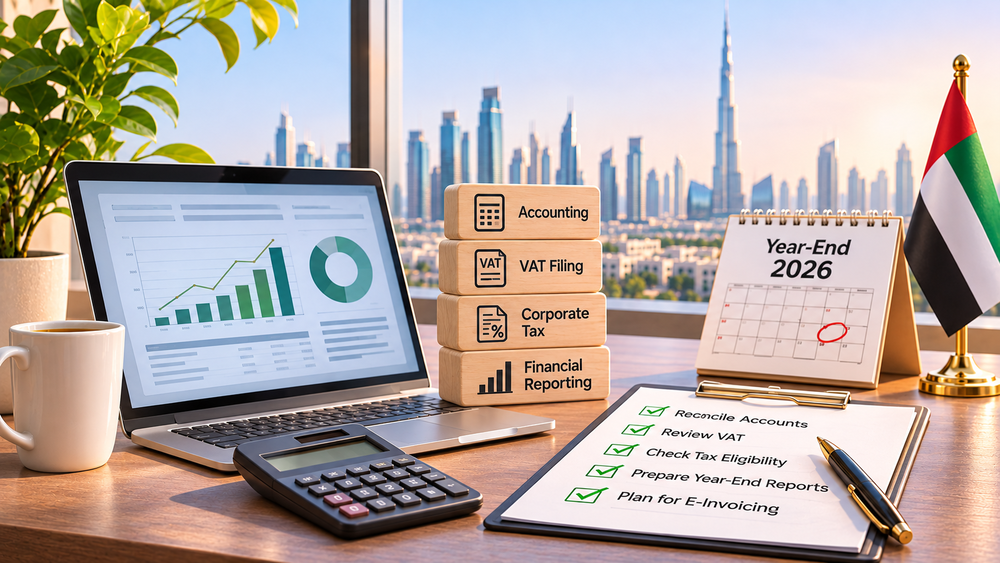
The last three months of the year are the busiest for any finance team. Sales push harder, suppliers send final invoices, and owners start asking how the year really went. In 2026, UAE businesses also face a few extra deadlines. Small Business Relief for corporate tax is ending, e-invoicing is on the way, and VAT rules changed at the start of the year. This is why many owners are now looking at accounting services Dubai firms offer, and asking a simple question: what should I actually be getting for my money?
This guide answers that question. It explains what good accounting support looks like, what it should cost you in time, and what to check before you sign with a provider.
Why Year-End 2026 Is Different for UAE Businesses
Most years, year-end is about closing the books and preparing reports. This year has more moving parts.
- Small Business Relief ends. Businesses with revenue of AED 3 million or less could elect to be treated as having no taxable income. This relief applies only to tax periods ending on or before 31 December 2026.
- E-invoicing is close. Large businesses must appoint an accredited service provider soon, and smaller businesses follow in 2027.
- VAT law was updated. Changes from 1 January 2026 affect reverse charge records and time limits on refund claims.
Each of these depends on clean, up-to-date accounts. If your books are behind, every one of these deadlines becomes harder and more expensive to meet.
What Good Accounting Services Should Include
Not every provider offers the same scope. Before you compare prices, compare what is included. A complete service for a small or medium business in Dubai usually covers the following.
Core Accounting Work
- Recording daily transactions such as sales, purchases and expenses
- Monthly bank and credit card reconciliations
- Tracking what customers owe you and what you owe suppliers
- Fixed asset records and depreciation
Reporting
- A monthly or quarterly profit and loss statement
- A balance sheet and cash flow statement
- Short notes that explain the numbers in plain words
Compliance Support
- VAT return preparation and filing
- Corporate tax registration and return support
- Records kept in the format and for the period the law requires
- Audit-ready files when your auditor or a bank asks for them
If a quote only mentions "bookkeeping", ask what happens with reporting and tax. These are often charged separately.
Signs Your Business Needs Outside Accounting Help
Many owners wait too long before getting support. Here are common warning signs:
- You file VAT returns at the last minute and are never fully sure of the figures.
- Bank balances do not match what your software shows.
- You cannot say which product or service makes the most profit.
- A bank or investor asked for financial statements and it took weeks to prepare them.
- Your accountant left and nobody else understands the system.
If two or more of this sound familiar, now is the right time to act. It is far easier to fix records in October than in March, when everyone is rushing to file.
How to Choose the Right Accounting Partner in Dubai
A good provider saves you time and helps you make better decisions. A poor one simply moves the stress somewhere else. Use these points to compare firms.
Ask About UAE Tax Experience
VAT and corporate tax rules in the UAE have changed several times since 2018. Ask how the firm kept clients up to date with the 2026 VAT changes. A clear answer shows they follow the law closely.
Check the Reporting Style
Ask for a sample monthly report. Can you understand it in five minutes? Numbers you cannot read will not help you run your business.
Understand the Pricing Model
Some firms charge a fixed monthly fee. Others charge by transaction volume or by hours. Fixed fees are easier to budget. Make sure you know what counts as "extra" work.
Confirm Response Times
When a VAT query comes from the Federal Tax Authority, you need answers fast. Ask who your contact person is and how quickly they reply.
What You Gain Beyond Compliance
Accounting is often seen as a cost. Done well, it pays for itself.
- Better cash control. You see late-paying customers early and can follow up before cash runs short.
- Smarter pricing. When you know your true costs, you can price products and services with confidence.
- Easier funding. Banks and investors trust businesses with clean, timely statements.
- Fewer penalties. Filing on time and correctly avoids fines that can quickly add up.
- More time. Owners get back hours each week to focus on sales, staff and customers.
For example, a trading company with 300 invoices a month may spend two full days each month chasing receipts and fixing entries. Handing this to a trained team frees those days and reduces errors at the same time.
A Simple Year-End Checklist for October
Use the next few weeks to prepare:
- Reconcile all bank accounts up to 30 September.
- Clear old unpaid invoices or mark them as doubtful.
- Check that every supplier invoice has a valid tax invoice for VAT.
- Review whether your revenue is near the AED 3 million Small Business Relief threshold.
- Plan who will handle e-invoicing setup and when.
Conclusion
Year-end 2026 brings more than the usual closing work. Tax relief is ending, e-invoicing is coming, and VAT rules have shifted. The right accounting partner keeps your books clean, your filings on time and your decisions clear. Before you choose, compare the scope, reporting style, pricing and response time. Amybizz supports Dubai SMEs with accounting, tax and reporting under one roof. Book a consultation to review your books before the year closes.