

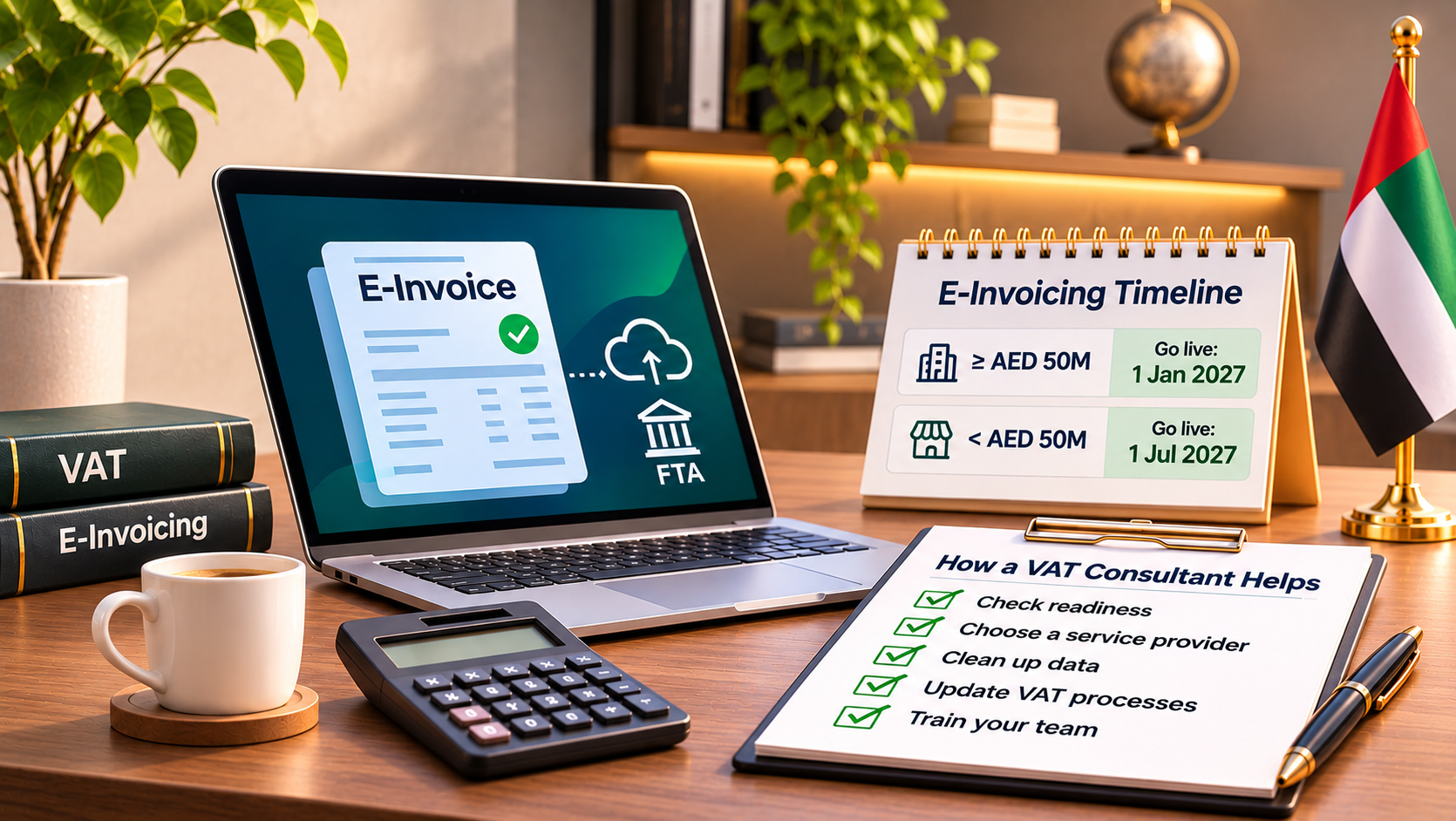
For years, a VAT invoice in the UAE could be a PDF sent by email. That is about to change. The UAE is moving to mandatory e-invoicing, where invoices are shared in a set digital format through approved service providers. Large businesses must appoint a provider by 30 October 2026 and go live from 1 January 2027. Smaller businesses follow in 2027. Add the VAT law changes that started in January 2026, and it is clear why many companies are now looking for a VAT consultant Dubai business can depend on.
This blog explains what e-invoicing means in plain words, what else changed in VAT this year, and how the right consultant makes the move smooth.
What E-Invoicing Means for Your Business
E-invoicing is not just sending a PDF. It means your invoice data is created in a structured format that computers can read. It then passes through accredited service providers, known as ASPs, and key details are reported to the Federal Tax Authority.
In simple terms:
- Your accounting or billing system must create invoices in the approved format.
- You must appoint an accredited service provider to send and receive invoices.
- Your customers and suppliers also connect through their own providers.
- Invoice data reaches the FTA much faster than a quarterly VAT return.
The UAE model is based on the Peppol network, which many countries already use.
Key Dates to Know
|
Business type |
Appoint a service provider by |
E-invoicing starts |
|---|---|---|
|
Revenue of AED 50 million or more |
30 October 2026 |
1 January 2027 |
|
Revenue below AED 50 million |
31 March 2027 |
1 July 2027 |
|
Government entities |
31 March 2027 |
1 October 2027 |
If you are a smaller business, you may feel you have time. In practice, system changes, testing and staff training take months. Starting early avoids a rush.
Other VAT Changes from January 2026
E-invoicing is not the only update. Changes to the VAT law took effect on 1 January 2026.
- Reverse charge. Businesses no longer need to issue self-invoices under the reverse charge. They must still keep supporting documents.
- Refund time limit. There is now a five-year limit for claiming excess refundable VAT. After that, the right to claim is lost.
- Input tax checks. The FTA can deny input tax recovery if a supply is linked to tax evasion. Businesses are expected to check that their suppliers and purchases are genuine.
Each of these affects how you record purchases and keep evidence. Old habits may no longer be enough.
How a VAT Consultant Helps
A VAT consultant connects the tax rules with your daily systems. Here is what that looks like in practice.
Readiness Review
They check your current invoices, software and processes. They list the gaps, such as missing fields, wrong tax codes or manual invoices.
Choosing a Service Provider
They help you compare accredited providers and check which one’s work with your accounting software.
Cleaning Master Data
E-invoicing needs correct customer and supplier details, including tax registration numbers. A consultant helps you clean this data before go-live.
Updating Processes
They update how you handle credit notes, reverse charge purchases and refund claims under the 2026 rules.
Training Your Team
They show your staff what changes day to day, so invoices are not rejected or delayed.
Signs You Need Help Now
Speak to a VAT consultant soon if:
- You still create invoices in Word or Excel.
- Your software vendor has not explained its e-invoicing plan.
- You have old VAT refund balances you have not claimed.
- You buy services from abroad and are unsure how to record reverse charge.
- Your VAT returns often need corrections after filing.
A Simple Preparation Plan
- October to December 2026: Review invoices, software and supplier data.
- Early 2027: Choose and appoint an accredited service provider.
- Spring 2027: Test sending and receiving e-invoices with key customers.
- Before go-live: Train staff and run a final check.
For example, a Dubai trading firm with AED 20 million in revenue that starts this plan in October will have nine months to test, rather than a few weeks.
Conclusion
E-invoicing and the 2026 VAT changes are the biggest shift in UAE VAT since it began in 2018. Businesses that prepare early will face fewer rejected invoices, fewer penalties and less stress. A skilled VAT consultant Dubai companies trust can review your systems, guide your provider choice and train your team. Amybizz supports SMEs with VAT registration, filing and e-invoicing readiness. Book a readiness review to see where your business stands today.