
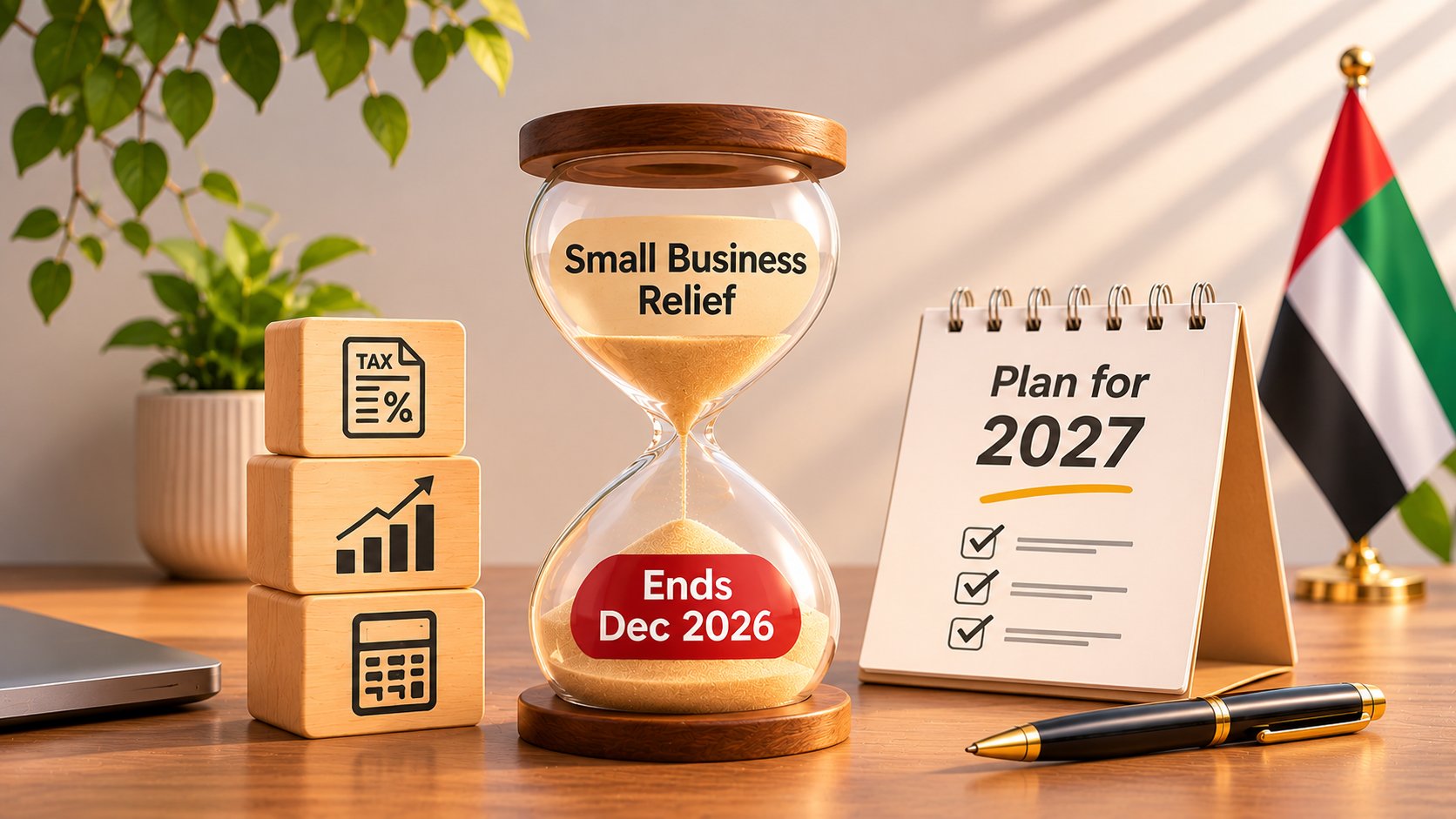
Since corporate tax started in the UAE, many small businesses have paid nothing. The reason is Small Business Relief, which lets eligible companies with revenue of AED 3 million or less be treated as having no taxable income. That relief is coming to an end. It only covers tax periods that end on or before 31 December 2026. For thousands of SMEs, 2027 will be the first year with a real corporate tax bill. This is why speaking to a tax consultant UAE businesses trust is no longer optional. The next three months are the best time to plan.
This blog explains what is changing, who is affected and what a consultant can do for you before the deadline passes.
A Quick Recap: How Small Business Relief Works
Small Business Relief is not automatic. A business has to meet the rules and choose it in its corporate tax return.
- Revenue test. Revenue must be AED 3 million or less in the current tax period and every earlier period.
- Who can use it. Resident persons, including many mainland companies and sole establishments.
- Who cannot. Qualifying Free Zone Persons and members of large multinational groups.
- What you still must do. Register for corporate tax, keep proper records and file a return on time.
A key point that many owners miss: tax losses made in a year where you use the relief cannot be carried forward to later years.
What Changes From 2027
Once the relief ends, eligible SMEs move to the standard corporate tax rules.
- The first AED 375,000 of taxable income is taxed at 0%.
- Taxable income above AED 375,000 is taxed at 9%.
- You need proper financial statements to calculate taxable income.
- Deductions, non-deductible expenses and adjustments now matter.
For example, a consultancy with taxable income of AED 600,000 would pay 9% on AED 225,000, which is AED 20,250. Under Small Business Relief, the same business may have paid nothing. That is a real cost, and planning can reduce the surprise.
Who Should Act Before 31 December
Some businesses need to act sooner than others. Speak to a consultant now if any of these apply to you:
- Your revenue is close to AED 3 million and may cross it this year.
- You have never prepared full financial statements.
- You mix personal and business expenses in the same bank account.
- You are unsure whether you registered for corporate tax on time.
- You plan to restructure, open a new branch or move to a free zone.
How a Tax Consultant Helps You Prepare
A good consultant does more than file returns. They help you avoid problems before they start.
Checking Your Eligibility
They confirm whether you qualify for the relief this year, and whether choosing it is actually the best option. In some cases, especially with losses, it may be better not to elect for the relief.
Cleaning Up Your Records
They review your books, fix gaps and set up a chart of accounts that makes tax easier. This work also helps with VAT and future e-invoicing.
Estimating Your 2027 Tax
They build a simple forecast of your likely tax bill once the relief ends. This helps you set aside cash instead of scrambling later.
Reviewing Deductible Costs
They explain which expenses you can deduct, which are limited, such as some entertainment costs, and which cannot be deducted at all.
Managing Deadlines
Corporate tax returns are due within nine months of the end of your tax period. A consultant tracks these dates so you do not face late filing penalties.
Common Mistakes to Avoid
Even careful owners make these errors:
- Assuming the relief applies automatically without electing for it in the return
- Thinking "no tax" means "no need to file"
- Splitting one business into several to stay under AED 3 million, which the rules treat as artificial separation
- Leaving year-end adjustments until the filing deadline
- Ignoring related party transactions, such as payments to family members or owners
What to Ask When Choosing a consultant
Not all advisors are equal. Before you hire, ask:
- Are you registered as a tax agent with the Federal Tax Authority, or do you work with one?
- How many SMEs have you helped with corporate tax returns?
- Can you handle both corporate tax and VAT?
- Will you explain my tax position in simple terms?
- What is included in your fee, and what costs extra?
Conclusion
Small Business Relief has given many SMEs a gentle start with corporate tax. That start ends with tax periods closing on 31 December 2026. Businesses that plan now can estimate their tax, clean their records and avoid last-minute stress. A trusted tax consultant UAE SMEs can rely on will guide you through eligibility, forecasting and filing. Amybizz helps Dubai businesses plan for corporate tax and VAT in one place. Book a review before the year ends.